
Thousands of patients with suspected brain tumours could get a diagnosis sooner, as the NHS launches a major pilot of a rapid genomic test.
The world-first NHS pilot of the test, which is being extended across specialist centres in England, will mean patients receive a definitive brain tumour diagnosis in days rather than weeks.
The cutting-edge technology works by quickly analysing the DNA or genetic code of a small tumour sample taken during biopsy or surgery, helping doctors identify what type of brain tumour the patient has.
Receiving a precise diagnosis within days means patients can start treatment including radiotherapy and chemotherapy sooner if needed.
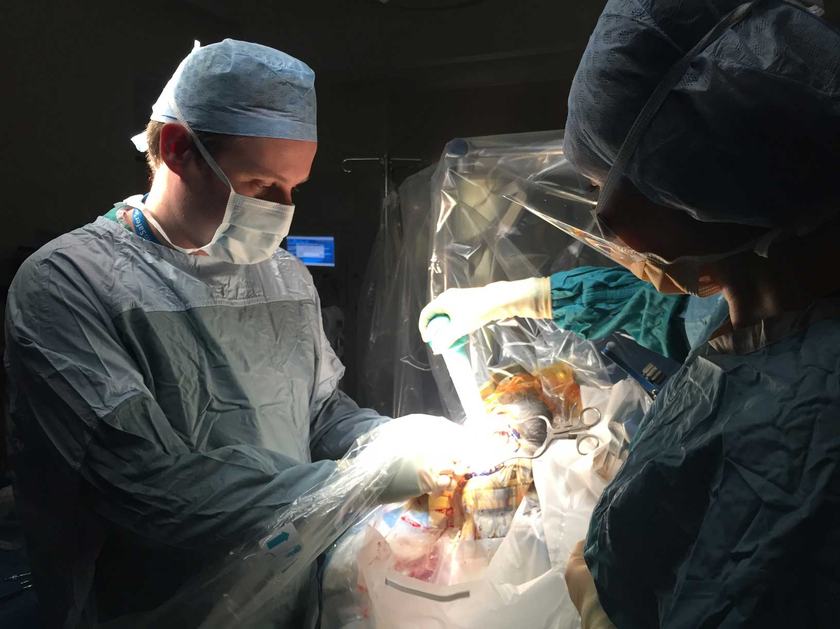
For patients having surgery to remove a brain tumour where the exact tumour type is not known, the rapid genomic test can be done and results delivered to the surgeon in under two hours while the operation is still under way – helping them decide how much of the tumour to safely remove while protecting healthy brain tissue.
A faster diagnosis will also help patients access suitable clinical trials earlier, as some trials require the precise genetic make-up of a tumour before a patient can take part.
Brain tumours are notoriously difficult to diagnose and treat and there are more than 100 different types ranging from slow-growing tumours to aggressive cancers - each of which can behave and respond to treatment differently.
The standard process for diagnosing brain tumours currently involves doing MRI and CT scans and then extracting a tumour sample which is taken away, tested, and examined under a microscope in a pathology lab, which can take weeks to definitively diagnose the type of tumour.
The NHS says this rapid genomic test has the potential to “completely transform” brain tumour diagnosis and is a “huge leap forward for patients”.
Professor Frankie Swords, NHS medical director, said: “For people with suspected brain tumours, getting the right diagnosis quickly can feel like a race against time, while waiting weeks for answers can be agonising for them and their families.
“This remarkable rapid test has the potential to completely transform how we diagnose brain tumours, with results reaching patients in a matter of days rather than weeks.
This is a huge leap forward for patients - a faster diagnosis means they can start the right treatment or access clinical trials sooner, while for some patients it could mean surgeons can make potentially life-changing decisions about their surgery while on the operating table
Professor Frankie Swords, NHS medical director
The NHS England pilot builds on the successful pilot already under way in Nottingham and Birmingham and will initially take the technology into five specialist centres before expanding further across England.
The rapid genomic test was developed by scientists and medics at the University of Nottingham and Nottingham University Hospitals NHS Trust.
Case Study: Nottingham University Hospitals
In a recent operation at Nottingham University Hospitals, a tumour sample was taken in theatre and tested in the same hospital during the operation.
The sequencing itself took around 20 minutes, with a result fed back to the surgical team less than two hours after the sample reached the laboratory - while surgery was still under way.
The rapid result gave the surgical team an early classification of the tumour, with further analysis providing a fuller molecular diagnosis within days rather than the weeks patients can currently wait.
Stuart Smith, Consultant Neurosurgeon at Nottingham University Hospitals NHS Trust and Clinical Associate Professor at the University of Nottingham, said: “I am very proud to have been part of this exceptional team creating this rapid genomic testing which will save valuable waiting time for patients who potentially are being told they don't have time on their side.
“The ability to have detailed information about the tumour at the point when decisions are being made in the operating theatre is game-changing.
“In some cases that can help us judge how far we should safely go while protecting healthy brain tissue.
This gives us a glimpse of how brain tumour surgery could change in the future - with genomic information available during the operation itself, helping us make more informed decisions for each individual patient.
Stuart Smith, Consultant Neurosurgeon at Nottingham University Hospitals NHS Trust
Steve Palmer, 55, from Nottingham, was diagnosed with a grade 4 glioblastoma after collapsing at the gym despite having had no previous symptoms.
Steve said: "For me, getting that quick diagnosis of exactly what type of tumour I had was a key thing, because it meant we could get the treatment plan in place very rapidly.
"Getting that definite result quickly took away what could have been weeks of anxiety. I’d had the surgery and I just wanted to get on to the next phase of treatment and recovery, and get on with fighting whatever I’ve got to fight.
Having the results so quickly also made it easier to process what was happening. They weren’t the results I wanted, but I’d much rather have that certainty quickly than be left waiting.
Steve Palmer, 55, from Nottingham, who was diagnosed with a grade 4 glioblastoma
Around 13,000 people in the UK are diagnosed with a primary brain tumour each year, and brain tumours are the biggest cancer killer of children and adults under 40.
Professor Dame Sue Hill, Chief Scientific Officer for England and Senior Responsible Officer for Genomics in the NHS, said: “This is another world-leading development for NHS genomics, taking pioneering science and testing how we can use it safely and consistently in patient care.
“Rapid genomic testing could dramatically shorten the wait for answers for brain tumour patients and, in some cases, give surgeons vital information before an operation is even over.
“Our ambition is to build the evidence for this testing to become part of routine NHS care, so patients across the country can benefit equally from faster, more precise diagnosis.”
Brain Cancer NHS Network of Excellence
NHS England is investing more than £2 million over two years in the Brain Cancer NHS Genomic Network of Excellence.
The network is clinically led from Birmingham, with scientific leadership from Nottingham, and is being delivered through NHS Genomic Medicine Service teams across England.
The first phase will introduce the testing across University Hospitals Birmingham NHS Foundation Trust, Nottingham University Hospitals NHS Trust, Great Ormond Street Hospital for Children NHS Foundation Trust, King's College Hospital NHS Foundation Trust and Newcastle Hospitals NHS Foundation Trust.
Additional genomic laboratory sites in Bristol, Oxford, Leeds and Manchester will join in the second phase.
The programme brings together brain surgery teams, pathology services and the NHS Genomic Medicine Service to standardise the approach and build the evidence needed for wider use across the NHS.
Cancer research and innovation are a key focus of the National Cancer Plan for England – speeding up the spread of innovation, improving access to genomic testing, and ensuring patients receive earlier diagnosis and treatment.
Non-urgent advice: Further information
- The rapid genomic test was developed by scientists and medics at the University of Nottingham and Nottingham University Hospitals NHS Trust. The approach uses Oxford Nanopore sequencing alongside specialist analysis software developed at the University of Nottingham. Their research was published in the journal Neuro-Oncology in 2025.
- The Network is delivered through the Central and South NHS Genomic Medicine Service, hosted by Birmingham Women’s and Children’s NHS Foundation Trust, and the East NHS Genomic Medicine Service, hosted by Cambridge University Hospitals NHS Foundation Trust, with contributions from other NHS Genomic Medicine Service regions.
- The first phase of the pilot will roll out the genomic test across five sites in the first year, covering five of the seven NHS Genomic Medicine Service regions:
- University Hospitals Birmingham NHS Foundation Trust
- Nottingham University Hospitals NHS Trust
- Great Ormond Street Hospital for Children NHS Foundation Trust
- King's College Hospital NHS Foundation Trust
- Newcastle Hospitals NHS Foundation Trust
- The second phase will include additional genomic laboratory sites in Bristol, Oxford, Leeds and Manchester.