
A baby boy in Derby was able to start treatment for a rare genetic condition including access to specialist, life changing care and support after taking part in the Generation Study. As part of the study, his genes were sequenced shortly after birth because his mum took part in the study at University Hospitals of Derby and Burton (UHDB).
Elaine Hess signed up to the Generation Study at her 12-week scan. The study involves a non-invasive blood sample which is taken from a baby's umbilical cord blood after birth, which is then used to analyse the baby's genome.
The Generation Study (opens in a new tab) is led by Genomics England, and co-ordinated in the East by East Genomics, in partnership with the NHS and looks at whether whole genome sequencing can help identify rare genetic conditions in newborn babies earlier.
Find out more about the Generation Study in the East Midlands and East of England.
For Elaine, taking part in research felt like an easy decision: "I'm a scientist myself, so I was interested and comfortable with taking part, for me, it was just a no brainer."
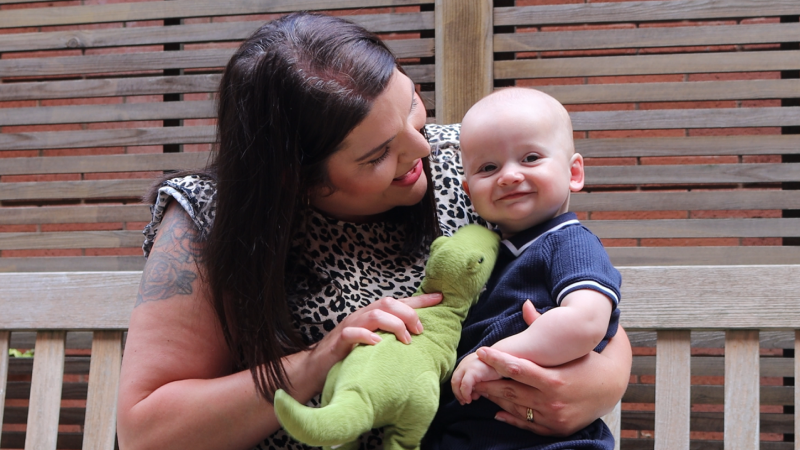
A few weeks after Aidan was born, Elaine received a call from a specialist clinician explaining that the screening had identified a possible genetic condition called C6 deficiency, which is an immune condition that affects the body's ability to fight infection.
Elaine remembers the phone call, she said:
My stomach flipped. You go to instant worst-case scenario but, there was no time for panic because we got access to the consultant quickly, who explained Aidan's diagnosis and our questions were answered.
I felt so relieved that by simply choosing to opt into the Generation Study research, we had learned about Aidan's genetic condition early which has had a life changing impact on our family because we now know what to look out for, and how to make sure he is safe and supported.
Where a condition is identified through the study and subsequently confirmed, the family are automatically referred to a specialist consultant to contact the family and are able to begin care right away.
Elaine and her family were invited to a detailed appointment with specialist professionals, where they talked through the condition, further testing, treatment and the steps the family may need to take to keep Aidan safe.
The early diagnosis has helped the family understand what symptoms to watch for and when to seek help. Because Aidan is at risk from certain bacterial infections, such as meningitis, which can be very serious in young children, the family now know they need to seek urgent medical advice if he develops a temperature or signs of infection. He is also receiving preventative antibiotics and additional vaccinations.
The diagnosis is also helping baby Aidan's family, with his sister now having genetic testing too and clinical genetics teams helping the family understand what the condition could mean for future children.
The potential to diagnose primary immunodeficiencies before a baby becomes seriously unwell with an infection is a significant advancement. Early diagnosis allows us to start treatments and give additional vaccinations if required, which is an important move towards preventing illness rather than just treating it when it occurs. This could make a real difference in protecting children with these rare conditions and improving their chances of a healthier future.
Dr Lucy Cliffe, Consultant Paediatrician in the Paediatric Immunology Service from Nottingham Children's Hospital, is leading Aidan's care
The Generation Study aims to sequence the genomes of 100,000 newborn babies and screens for changes linked to more than 200 rare conditions that can usually appear in early childhood. If caught early, the outlook for children with these conditions can be improved thanks to specialist care and sooner treatments. The study does not replace standard NHS newborn screening.
UHDB is one of 48 NHS trusts taking part in the Generation Study. At participating Trusts, research and maternity teams work closely with families to explain the benefits of the study and make participation as straightforward as possible.
The study allows families with children that have confirmed genetic conditions like Aidan to access diagnosis and specialist care sooner, therefore avoiding long waiting times which could have a big impact on lifelong health outcomes.
Most families will receive a no condition suspected result, however, a very small number, about one in 100 will have a condition suspected result. Taking part in the study will contribute to research that could lead to new treatments and help future generations of children with genetic conditions get a healthier start to life - it really does make a difference.
Laura Johnson, Lead Clinical Trials Midwife at UHDB
The Trust is also working to make research more inclusive by raising awareness of the study across local communities and encouraging participation from groups that are often under-represented in research.
The study is voluntary, and families can withdraw at any time. Participants are consented to be part of the study for 16 years as researchers use the data to learn more about genes and health.
For Elaine, the message to other parents is clear:
I'm just really grateful that I did take part. They may not find anything, but if they do find something, it gives you the information that you need to look after your child.
This story was developed and shared by UHDB, view the original on the UHDB website (opens in a new tab).