
A research study has shown that getting genomic test results within days rather than weeks lead to better, more personalised care for more than half of children in the study newly diagnosed with cancer. NHS England is now supporting East Genomics to lead a national trial of rapid whole genome sequencing (WGS), which will run across multiple NHS Genomic Medicine Services.
In the study, faster WGS reduced the average wait for results from six weeks to three days. Having results sooner could enable earlier diagnoses, more targeted treatments and, in some cases, help avoid unnecessary treatments.
Clinicians can contact our team to find out about accessing rapid WGS for children with cancer through the Paediatric Oncology Network of Excellence.
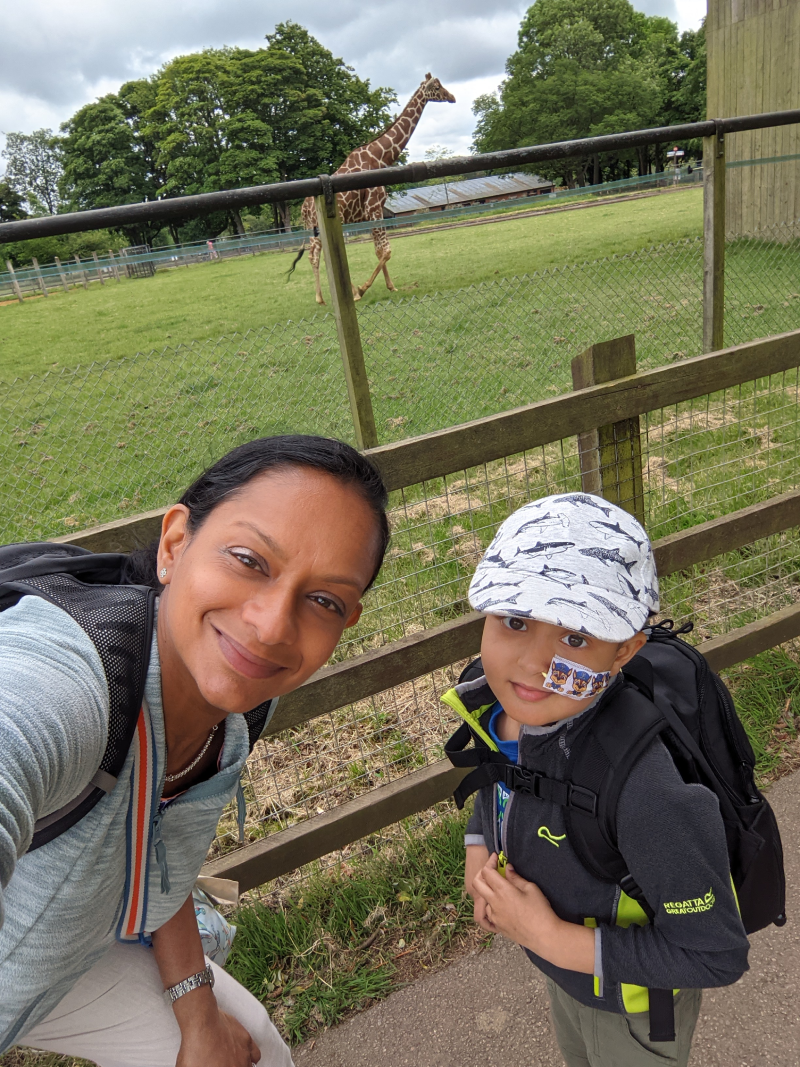
Razia, a mum from St. Albans, is a patient advocate supporting the national rapid WGS trial. Her son, Zayan, who has now been cancer-free for two years, had conventional WGS on the NHS in 2021 after being diagnosed with leukaemia.
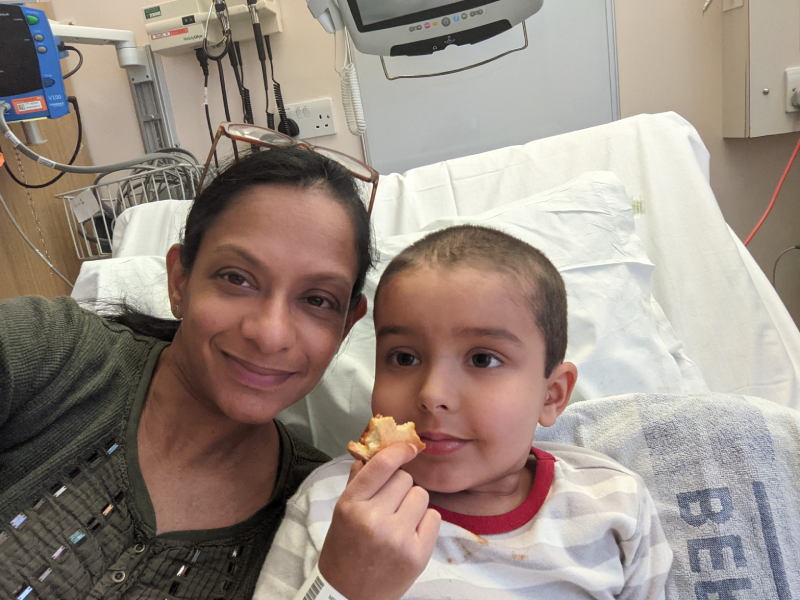
Whole genome sequencing is a powerful technology and making it faster could really unlock its potential. The faster results offered by rapid WGS could help improve diagnosis and treatment and hopefully will mean more children survive cancer.
Razia, patient advocate and mum to a son who had Leukaemia
The NHS is already the world’s only national health service to provide WGS for all children (age 0-25) with suspected or confirmed cancer. WGS reads the complete genetic code and provides vital information that can help doctors to provide the best diagnosis and treatment, but results can take six weeks or more.
The research, published today (6 Oct) in Nature Communications and led by teams in Cambridge with collaboration from Illumina, used ‘rapid WGS’ to analyse samples from children at Addenbrooke’s Hospital. Any findings that had the potential to change treatment decisions were verified using clinically-approved tests.
For more than half of the children in the study, the findings, once verified, helped doctors to select better treatments, resulting in faster responses and fewer side effects. In a few cases, children were even able to avoid unnecessary treatments.
The story of one of the children who took part in the trial is included below. His parents say taking part in the trial helped save his life after he was admitted to hospital with a collapsed lung and struggling to breathe.

Whole genome sequencing can tell us a lot about a cancer and increasingly informs the use of highly effective treatments. By making that information available as quickly as possible we’re maximising the potential for children to benefit, helping them to experience fewer side effects, potentially avoid unnecessary treatments, and giving them a better chance to go on to live healthy lives.
Dr Aditi Vedi, paediatric oncologist at CUH, Assistant Research Professor in the Department of Paediatrics, University of Cambridge and study lead
The study included samples from 54 children with all kinds of cancers, including children with blood cancers and tumours of the brain and other organs. Of these, 35 were analysed at the time of diagnosis, of which most (18/35) had their treatment improved thanks to the WGS results. This included:
- Two children who avoided invasive treatments as their tumours were benign and went away on their own
- Two children who were able to have less extensive kidney cancer surgeries
- One who was able to have a precision medicine treatment targeting a specific gene
The researchers are now developing a national paediatric genomic Network of Excellence supported by NHS England, which will bring together experts from across England to develop rapid WGS for use in the NHS.

This rapid WGS approach has been developed at the Cambridge Children’s Innovation Hub, a collaboration between Cambridge University Hospitals NHS Foundation Trust, NHS East Genomics, the Department of Paediatrics, University of Cambridge and Illumina. It is supported by the National Institute of Health and Care Research (NIHR) Biomedical Research Centre: Cambridge.
The Hub will support the Cambridge Children’s Hospital, the first facility of its kind to fully integrate physical-mental healthcare and research. The hospital’s Cancer Centre is a leader in advanced diagnostics research that aims to improve care in the East of England and nationally.

Genomic testing is transforming care in paediatrics for children with cancer and rare diseases. We’re committed to making genomics more accessible and will continue our work through the genomic medicine and cancer centres within the Cambridge Children’s Hospital to develop further innovations in cancer diagnosis and treatment.
Professor David Rowitch, Professor of Paediatrics, University of Cambridge, Director of Research, Cedars-Sinai Guerin Children’s and senior author on the paper
Sean Humphray, Senior Director, Translational Research Group, Illumina said: “We are delighted to be part of this exciting project and to collaborate with such a talented team. In this research, we were able to unlock discoveries sooner in some of the most challenging parts of the genome, supporting faster insights that may inform future research and potential therapeutic strategies. We look forward to continuing and expanding our collaboration to benefit researchers and, ultimately, patients.”
Access to fast, effective genomic technologies is one of the Government’s 5 Big Bets for healthcare reform and a core aspect of their 10-Year Health Plan. Having a record of a person’s complete genome can help to predict illness and personalise treatments.
For children and families affected by cancer, getting the right diagnosis quickly can make a huge difference – helping them get the best treatment sooner, and in some cases reducing the side effects or helping them avoid treatments they will not benefit from. Zayan’s story highlights just how vital genetic testing can be and these exciting findings show the real potential of rapid whole genome sequencing to transform care and bring faster, more personalised treatment to children with cancer.
Professor Dame Sue Hill, Chief Scientific Officer for England and Senior Responsible Officer for Genomics in the NHS
A rare form of lymphoma
A 9-year-old boy was admitted to Addenbrooke’s Hospital with a collapsed lung and struggling to breathe. Scans showed his chest contained a possible cancerous mass and was filling with fluid, which collapsed his lung and was pressing on both his airways and heart.
Doctors suspected lymphoma. Normally, diagnosis would involve collecting a tissue sample from the cancerous mass but he was too unwell. Instead, a small sample was taken of the fluid in his chest.
Rapid WGS alongside existing clinical tests using the fluid sample indicated a rare condition called T-cell lymphoblastic lymphoma (T-LBL). Getting the WGS results so quickly helped doctors to be confident that his emergency treatment was the right approach.
He responded extremely well to the initial treatment, achieving a 90% reduction in the cancer in the first month.
He is now home with his family. He will continue to need maintenance treatment until 2028 to stop the cancer coming back. He will only be given the all clear in 2033, five years after he completes his treatment.
His mum said:
We we’re so lucky that we came to Addenbrooke’s when we did. The team acted so quickly and have been so supportive to us and all the family.
The family want to give their thanks to everyone at Addenbrooke’s involved in their care including the staff of the C2 children’s ward, Dr Barnard, Dr Vedi and Professor Behjati.