

Researchers in Cambridge have found evidence linking genetic changes that occur throughout our lives to autoimmune diseases, where cells from the immune system attack healthy cells.
Published today in the journal Nature, the study reveals how somatic mutations – genetic changes that occur throughout our lives – contribute to autoimmune diseases in the thyroid gland.
The discovery is expected to be relevant to other autoimmune conditions including rheumatoid arthritis, multiple sclerosis, lupus and type 1 diabetes. In total, autoimmune diseases affect up to 1 in 10 people.
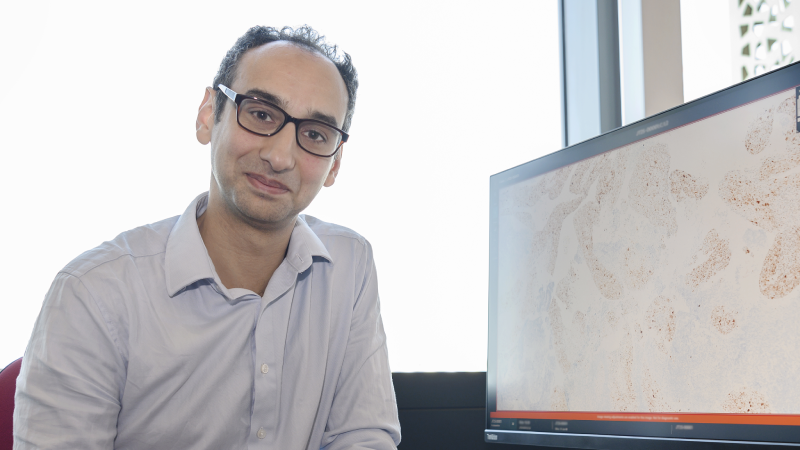
Despite their huge impact on people’s health, there is still a lot we don’t know about autoimmune diseases. This work confirms something we’ve long suspected but haven’t had the technology to prove. It’s a key step towards better, more targeted ways to treat people with these conditions, so they can have a better quality of life.
Dr John Tadross, author on the paper and East Genomics molecular pathology co-lead
This work confirms a long-held theory about the origins of autoimmune diseases and, with further research, could lead to new ways to prevent and treat these conditions.
The research involved clinicians from Cambridge University Hospitals NHS Foundation Trust (CUH), working with scientists at the Wellcome Sanger Institute, Institute of Metabolic Science (IMS) at the University of Cambridge, and colleagues. It was made possible thanks to the generosity of patients, many at CUH, who consented for their samples and data to be used for research.
As we get older, our cells randomly gain small genetic changes. Most changes have no effect but the right combination of changes in the right cells can lead to illness.
Over time, each cell can develop its own collection of unique genetic changes that make it different to the cells around it. These changes can only be studied using advanced high-sensitivity genetic tools.
The research shows how, if the right combination of changes occurs in B cells – cells in the blood that are part of the immune system – they can cause the immune system to start attacking healthy cells.
In this work we’ve been able to explore the genetics of autoimmunity in unprecedented detail. While our focus has been on the thyroid gland, we expect these genetic changes to be a factor in many other autoimmune conditions too, creating the potential for exciting new treatments.
Professor Nadia Schoenmakers, author on the paper and academic thyroidologist formerly at CUH and the IMS, now at the University of Birmingham.
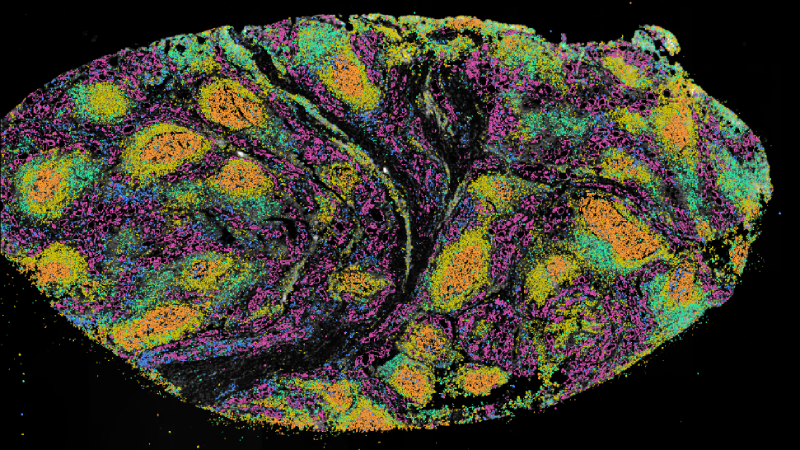
In particular, the study showed that some cells that contained up to six changes, and found that changes to genes called TNFRSF14 and CD274 (or PDL1) were particularly common in patients with thyroid auto immune diseases. Both genes are known to play a part in controlling activation of the immune system.
The research team are continuing to build on this work and are now looking to confirm whether these changes can cause illness and exploring their role in other autoimmune conditions.
Dr Pantelis Nicola, co-first author at the Wellcome Sanger Institute and a clinical fellow in the Wellcome/Sanger Cambridge PhD for Clinicians programme said: "Autoimmune diseases are currently treated by broadly suppressing the immune system, which can leave patients vulnerable to infections as well as a long list of other complications. If these findings are confirmed, they could eventually enable more precise diagnoses and treatments leading to better patient outcomes.”
Dr Andrew Lawson, co-first author at the Wellcome Sanger Institute, said: “Our study suggests that somatic mutations in immune cells may play an important role in autoimmune disease, something researchers have long suspected but lacked the techniques to investigate.”
The work was funded by Wellcome and supported by the NIHR Cambridge Biomedical Research Centre.