
Parents of babies born at Nottingham University Hospitals (NUH) will now be offered screening to look for over 200 rare conditions as part of a national research study seeking to identify treatable genetic conditions in newborn babies, which may otherwise have been diagnosed later.
NUH is now among more than 40 NHS Trusts across England recruiting parents to the Generation Study, led by Genomics England in partnership with the NHS.
Running alongside the established NHS newborn blood spot screening programme, the study provides an optional, free test to screen newborn babies for over 200 rare conditions that usually appear in the first few years of life, can be improved if caught early, and can be treated through the NHS in England. The test is carried out using blood samples taken shortly after birth.
Every year, several thousand children in the UK are affected by rare genetic conditions, but families often endure years of tests and uncertainty before they receive a diagnosis. For many families these delays in getting a diagnosis can mean treatment options are limited or less effective.
Since the Generation Study started in 2024, over 35,000 families have joined the study, with more than 90 babies having been identified as having a suspected genetic condition and referred to the NHS for confirmatory testing, and specialist treatment and care.
Some of the conditions tested for on the study are relatively common, such as Cystic Fibrosis, which affects 1 in every 2,500 births in the UK each year, or Spinal Muscular Atrophy (SMA), which affects around 1 in 10,000 babies. Other conditions are less common, for example rare forms of retinal dystrophy which affect less than 1 in 100,000 children.
Helen Janiszewski, Clinical Lead for Nursing and Midwifery Research and Innovation at NUH, is leading the Generation Study team NUH. She said:
“We are delighted to be able to offer NUH families access to the newborn screening available through the Generation Study.
Our team are working hard to reach all parents under the care of our neonatal and maternity teams at the Trust, to explain that the Generation Study is a free, optional way to screen for over 200 rare genetic conditions that can be treated if caught early.
Helen Janiszewski, Clinical Lead for Nursing and Midwifery Research and Innovation, NUH
“The vast majority of our families will not receive a condition suspected result, but those who do will be able to access the specialist care their baby needs straight away”.
In our region, the Generation Study is also open to families under the care of maternity services at University Hospitals of Leicester and University Hospitals of Derby and Burton.
Case study: The Pancholi Family
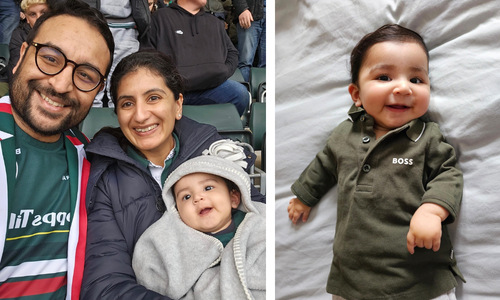
Priya and Abhishek Pancholi from Leicester (opens in a new tab) are enjoying life with their 11-month-old son, Rohan, thanks to their participation in the Generation Study and the specialist care they received from staff in Clinical Genetics, Fetal maternal medicine, Paediatrics and Neonatology at University Hospitals of Leicester (UHL). However, their story also highlights the vital role that early diagnosis and access to specialist care can have for rare conditions.
Mum, Priya, explains: “Our first child, Aarav, was born in September 2022. As first-time parents, we didn’t know what to expect, but the pregnancy was normal and at first everything seemed fine.
We had a few feeding issues, and he wasn't putting on weight, but we were told that it was nothing to worry about, and to keep an eye on things. But as time went on, as Aarav’s mum, I just knew something wasn't right. Aarav wasn’t feeding and was starting to miss milestones in his development
Priya Pancholi, mum to Aarav and Rohan
When Aarav was six months old, a colleague and friend, Dr Deepa Panjwani, Neonatal Consultant at UHL, recognised Aarav’s symptoms and advised the couple to seek an urgent referral via their GP.
Priya said: “She immediately picked up that something was wrong. Aarav wasn’t putting on weight and he was no longer moving his legs, which he had been previously.
“She said we should get Aarav seen straight away so I we went to our GP and at this point got a referral to General Paediatrics at UHL, which Deepa picked up.
“She immediately arranged for blood samples from Aarav, myself and my husband to be sent for genetic testing, which confirmed that Aarav did have SMA”.
Although Priya and Abhishek finally had a diagnosis to explain Aarav’s symptoms, for them it came too late. Sadly Aarav died shortly after his first birthday.
Through their grief at losing Aarav, Priya and Abishek were supported by Dr. Neeta Lakhani,
Consultant in Clinical Genetics at University Hospitals of Leicester NHS Trust.
Priya said: “The care we received from Neeta, and Deepa, was exceptional. Although we had lost the ‘critical window’ for treatment to help Aarav, Neeta helped us so much as a family, and very quickly showed who she is as a person, not just a doctor, but who she is as a human being.”
Priya gave birth to her second son, Rohan, in February 2025. Rohan took part in the Generation Study. The study did not report a condition suspected case of SMA, which was backed up by separate testing the couple did for that condition specifically prior to him being born.
Priya is clear about the benefits of newborn screening through the Generation Study.
She said: “Rohan is absolutely the sunshine of our life, and looks so much like his brother.
If Aarav had been diagnosed when he was born, we believe he would be with us now.
Priya Pancholi
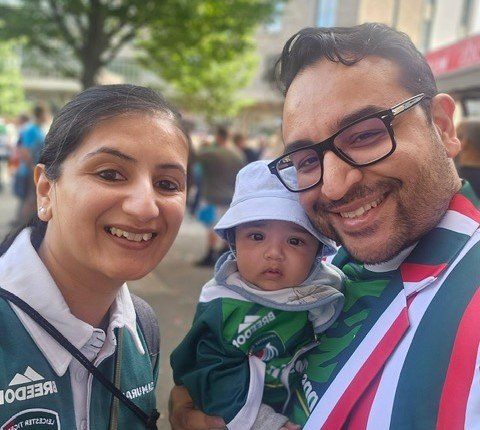
“In many ways, the fact that his brother Rohan is part of our family is a legacy to Aarav, and the exceptional support and care we have received at UHL.
“My sister and one of my friends both gave birth at UHL, and both chose to be part of the Generation Study. We really do believe that knowledge is power, and that when it comes to rare conditions, not knowing, and not having early access to specialist care, is the worse thing any family can face”.
Aarav was the reason I became involved in the Generation Study. It is a heartbreaking example of exactly why early screening is so crucial to the diagnosis and treatment of rare conditions in newborn babies.
Dr Neeta Lakhani, Consultant in Clinical Genetics at University Hospitals of Leicester NHS Trust
Dr Neeta Lakhani said: “We know that we have very diverse communities here in the East Midlands, but my hope is that Priya and Abhishek’s experience of losing Aarav, and going on to have a healthy son in Rohan, will encourage families to consider taking part in the Generation Study”.
Dr Ajoy Sarkjar, Head of the Clinical Genetics Service at NUH, where families can receive counselling and expert guidance and support through the genetic testing process and beyond, says: “Rare conditions are individually rare, but collectively common. For many of the 15,000 babies born with a rare condition in England every year, early diagnosis of their condition shortly after birth is vital to ensure that the treatments available are given early”.
“Many families affected by a rare condition can face a long, challenging journey before getting a correct diagnosis, in some cases over five years, involving numerous specialists, tests, and misdiagnoses, which can significantly impact quality of life and reduce the effectiveness of available treatments, when a diagnosis is eventually made.
Priya and Abhishek’s experience of what we call the ‘diagnostic odyssey’ for Aarav highlights the vital role early diagnosis plays in getting these babies the specialist care and treatment they need to improve, and in some cases save, their lives
Dr Ajoy Sarkjar, Head of the Clinical Genetics Service at NUH
Non-urgent advice: Find out more
In the East region, the Generation Study is currently recruiting at the following NHS Trusts:
- Cambridge University Hospitals
- East Suffolk and North Essex Foundation Trust
- Norfolk and Norwich University Hospitals
- Nottingham University Hospitals
- North West Anglia Foundation Trust
- University Hospitals of Derby and Burton
- University Hospitals of Leicester
Parents receiving under the care of maternity services at these Trusts can ask their healthcare team about participating in the Generation Study.
Further information about the Generation Study can be found on the Genomics England website.
Watch the Generation Study video
Link: https://www.youtube.com/watch?v=7gizK7_HSXk