
Parents of babies born at NUH hospitals will now be offered screening to look for over 200 rare conditions as part of a national study seeking to identify treatable genetic conditions in newborn babies, which may otherwise have gone undiagnosed, and which could lead to earlier treatment.
Nottingham University Hospital is now among 30 NHS Trusts across England recruiting pregnant mothers to the Generation Study, led by Genomics England in partnership with the NHS.
Running alongside the established heel-prick test for newborn babies, the study provides a free, safe test to screen newborn babies for over 200 rare conditions that usually appear in the first few years of life, can be improved if caught early, and can be treated through the NHS in England.
Some conditions have simple treatments, like taking a daily vitamin. Others are treated more intensively, with therapies and medication.
Every year, several thousand children in the UK are affected by rare genetic diseases, but families often endure years of tests and uncertainty before they receive a diagnosis. For many families these delays in getting a diagnosis can mean treatment options are limited or less effective.
Impact on families
Since the Generation Study started in 2024, over 25,000 families have joined the study, with more than 60 babies having been identified as having a suspected genetic condition and referred to the NHS for confirmatory testing.
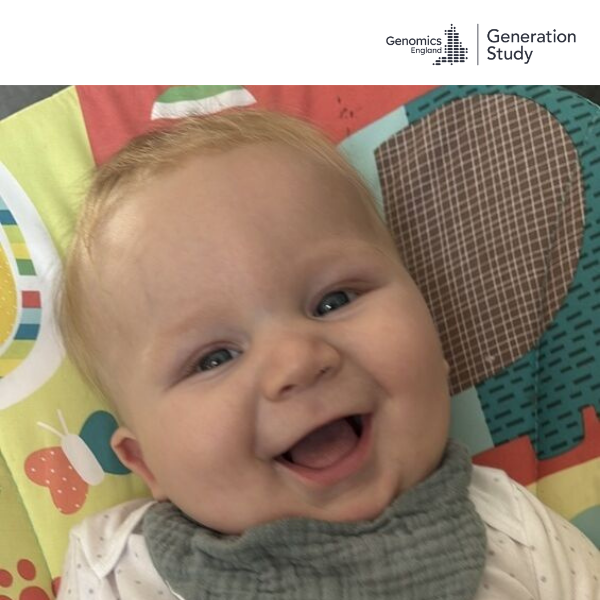
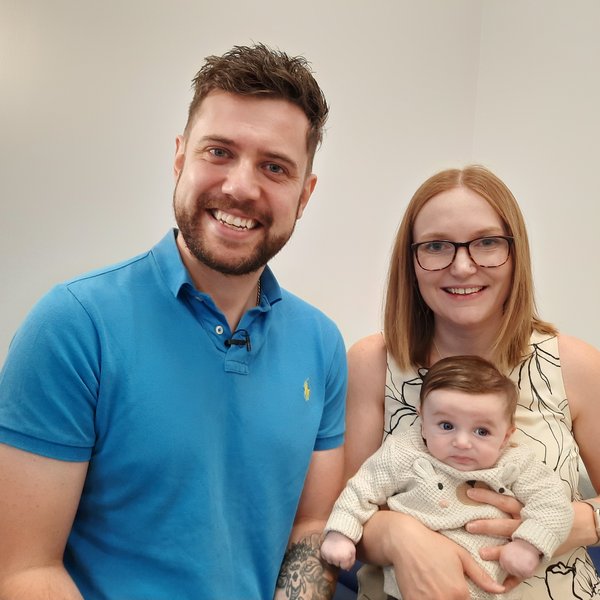
Vicky and Joey Underhay’s son, Freddie, is one child who has benefitted from being part of the study.
Four weeks after being born at the Jessop Wing at Sheffield Teaching Hospitals NHS Foundation Trust in April and having his genome sequenced, Freddie was diagnosed with hereditary retinoblastoma, caused by a change in his RB1 gene. Retinoblastoma is a rare and aggressive form of eye cancer usually diagnosed in very young children. Around 44 children are diagnosed with retinoblastoma every year in the UK, and early detection is crucial for preserving vision. However, when there is no known family history, diagnosis often comes later, once symptoms have progressed.
There were no signs that anything was wrong. He was a normal little baby, so the results came totally out of the blue. He had passed all his eye tests in hospital
Vicky Underhay, mum to Freddie
Very shortly after his diagnosis, Freddie was able to start treatment at Birmingham Children's Hospital, which is one of two specialist centres that treat retinoblastoma in the UK. This gives doctors the best chance to minimise the impact on his vision.
Freddie has undergone a mix of chemotherapy and laser treatment to treat the tumours in his eyes. Due to the nature of retinoblastoma and the genetic change involved, Freddie will need ongoing treatment, monitoring, and specialist care for the foreseeable future. He will be having regular eye screenings up until the age of 16 in Birmingham.
Our decision to join the Generation Study has changed Freddie’s life phenomenally. We were told that the first 6 months is vital in diagnosing and treating the condition. There’s no telling at what point it would have been discovered if we hadn’t taken part and what might have happened.
Joey Underhay, dad to Freddie
The care that Freddie has received, and us as parents as well, has been second to none. We can’t thank everyone enough for all that they’re doing for Freddie.”
Vicky adds: “When you sign up to research like this, you think it will never be you. But if we had thought ‘ignorance is bliss’ then the cancer would have spread down his optic nerve and into his body. We’re hopeful that this kind of testing will be readily available to any parent who wants it for their child in the future.”
The chances of protecting Freddie's eyesight have been greatly improved by finding out about his eye tumours earlier, thanks to the family participating in the Generation Study.
Generation Study at Nottingham University Hospitals
Thousands of babies are born in the UK every year with rare genetic conditions, but these can be hard to diagnose. It takes an average of five years for a rare condition to be diagnosed, with many families experiencing a much longer ‘diagnostic odyssey’ of up to a decade. In these cases their condition may have progressed to the point where treatment, if it exists, is far less effective.
Ajoy Sarkar, Head of Clinical Genetics at NUH
Helen Janiszewski, Nursing and Midwifery Clinical Lead for Research and Innovation at Nottingham University Hospitals, who heads up the team recruiting families to the Generation Study at NUH, said: “It is great news for families using maternity services at the Trust that they now have the option of screening their babies for hundreds of rare genetic conditions through the Generation Study. My team will support all pregnant people at NUH to understand the benefits of consenting to have their baby screened. For the very small number of families who receive a ‘condition suspected’ result – around 1 in 100 of babies screened – this could prove so important in terms of getting an early diagnosis leading to treatment which may help reduce their symptoms or stop them from becoming ill”.
Sadia Haqnawaz of the University of Leicester, who has been supporting women since 2010 after the loss of her baby daughter to Autosomal Recessive Polycystic Kidney Disease (ARPKD), said: “The Generation Study is such a positive step forward for all communities, but particularly for pregnant Black and South Asian women who have traditionally been underserved when it comes to providing genetic diagnoses and support.
Empowering pregnant women with information and choices is so important, and I would encourage any families who could benefit from the Generation Study at all participating Trusts, including Nottingham University Hospitals and University Hospitals of Leicester, to take part.
Sadia Haqnawaz, University of Leicester, who advocates for genomic testing after the loss of her baby daughter to Autosomal Recessive Polycystic Kidney Disease
Catching rare conditions early
Sequencing a newborn baby’s genome can lead to earlier diagnosis and treatment of conditions, and in some cases can prove life-saving. Sarah and Rob Everitt, from West Yorkshire, consented to whole genome sequencing for their son Owen which pinpointed his condition. He was only the sixth person in the UK, and the 30th in the world, to be diagnosed with a rare gene disorder - which is not inherited, but due to a spontaneous mutation in his DNA.
Sarah Everitt says getting the diagnosis was life-changing: "It was like winning the lottery….because we knew there was a treatment pathway; we knew we could get him support and he could attend a mainstream school."
Sarah says she would strongly encourage parents of newborns to take up the offer of whole genome sequencing through the Generation Study: "It's going to change the face of medicine….being able to treat all these unknown medical conditions, or at least to have them explained."
Pregnant couples receiving care at Nottingham University Hospitals can ask their healthcare team about participating in the Generation Study. Further information about the Generation Study can be found on the Genomics England website. (opens in a new tab)